Because the playbook keeps changing, and we’re here to keep it real.
Key takeaways
- Even top-ranking SEO content didn’t always make it into AI search results
- Performance Max became powerful—but also unpredictable without the right inputs
- Ad fatigue hit faster than ever, making creative rotation a must
- CTV gained traction—but only when expectations were realistic
- GA4 forced us to simplify what we measure and why
- AI content flooded the web, but people still want real human perspective
- Short-form video (with captions) isn’t optional anymore
- Buyers moved slower this year—so staying visible mattered more than ever
Digital marketing has always been a moving target—but 2025? This year came with plot twists. New AI features changed how search works. Ad platforms kept shifting the rules. And consumer behavior? Let’s just say people weren’t buying the same way they used to.
We spent the year testing, adjusting, and helping our clients make sense of it all. And while the tools may keep evolving, a few lessons stuck with us.
Here are the 6 biggest takeaways from the front lines of marketing in 2025—and what you should keep in mind as you plan for the year ahead.
1. Google’s AI overviews changed how we think about SEO.
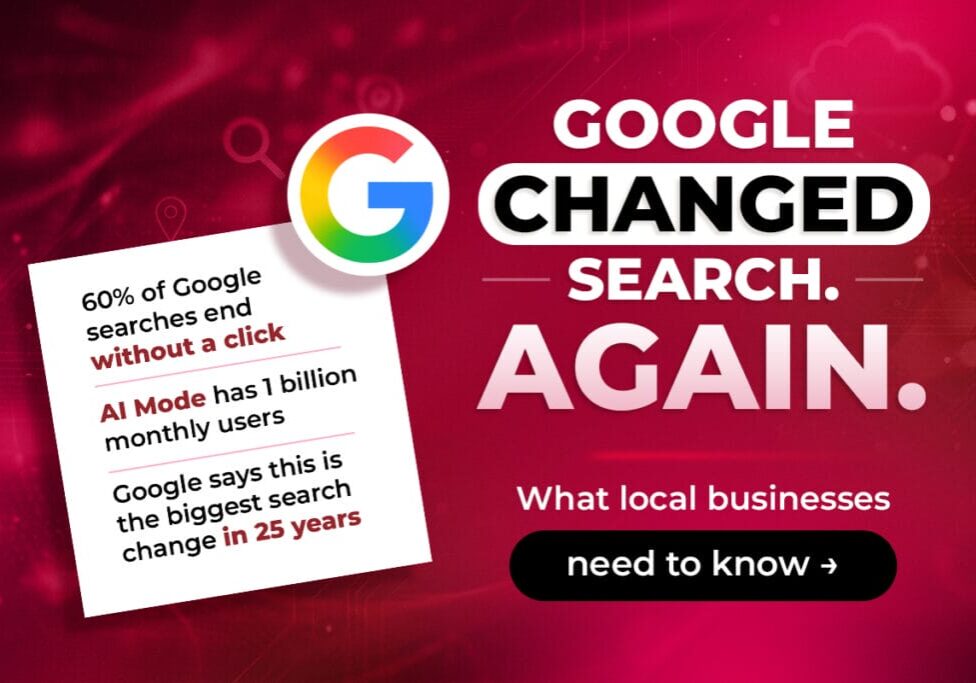
When AI started becoming a bigger part of Google’s search results, we all knew things were going to shift. What we didn’t expect, however, was to see pages that ranked #1 in traditional search completely missing from AI overviews. That threw a lot of businesses (and some marketers) for quite a loop.
What we learned:
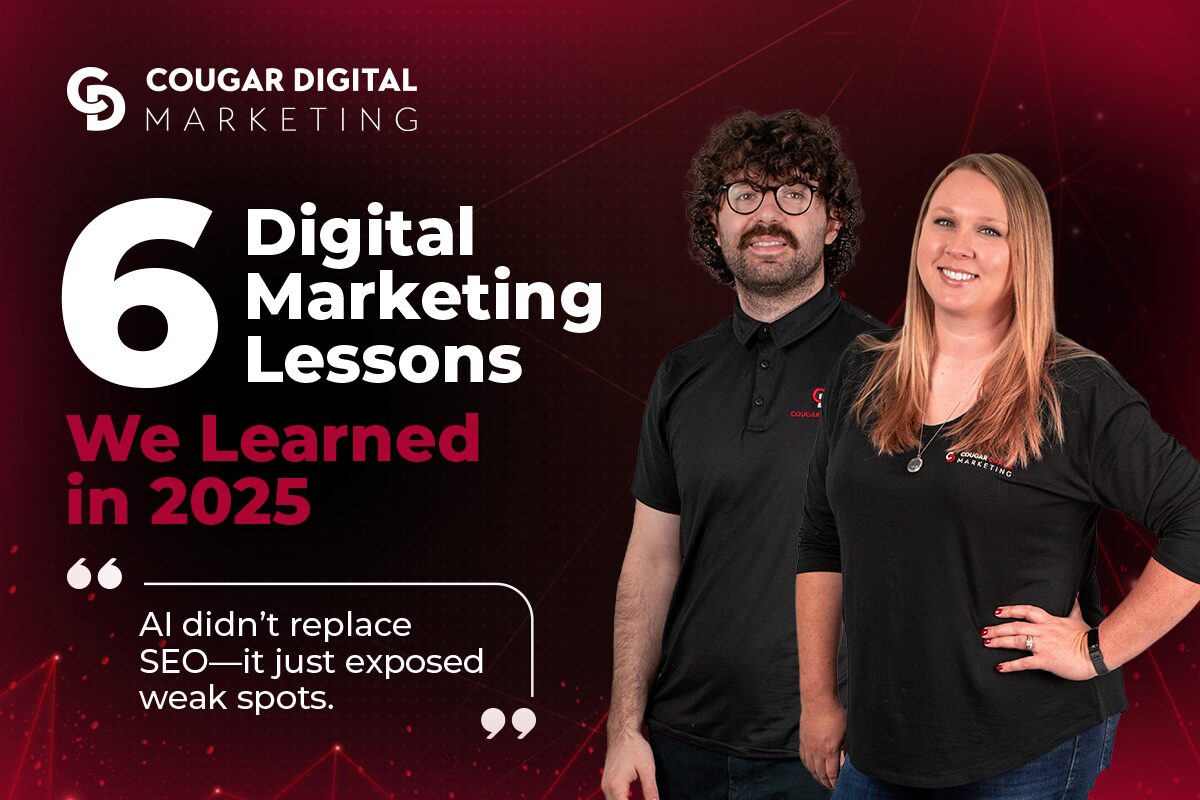
AI didn’t replace SEO—it just exposed weak spots.
If your content wasn’t clear, helpful, or structured in a way AI could understand, it didn’t matter how well you ranked. And if your local presence was shaky (think old reviews, outdated business info, sparse or missing service pages) you were even more likely to get overlooked.
So yes, AI changed how people search. But 2025 taught us that the basics—good content, clean structure, strong local signals—are more important than ever.
???? Check out our full breakdown: What Is SEO, Really?
2. A lot of businesses still don’t know what their marketing goal actually is.
We’ve always known that different types of marketing serve different purposes. But 2025 reminded us just how often that distinction gets missed on the client side—especially when trying something new.
A great example? CTV.
Streaming video ads are a fantastic tool for brand awareness. You’re reaching people in specific zip codes with a strong visual message—kind of like a digital billboard that follows them into their living room. But they’re not going to click, call, or fill out a form right after seeing it. That’s not how awareness works.
Still, we saw some businesses go into it expecting instant leads. And that disconnect didn’t just happen with CTV—it showed up across channels.
What we learned:
It’s not that certain types of marketing don’t work. It’s that people don’t always know what they’re asking it to do.
That’s not a knock. Most business owners aren’t marketers. But it means we’ve had to spend more time upfront clarifying:
- Are you trying to drive action now (like lead generation)?
- Are you building visibility for the long game (brand awareness)?
- Are you nurturing people already in your orbit (retargeting)?
- Or are you trying to mix and match—just in the right order?
The best results always came from clients who understood the goal of a campaign before they judged its results.
3. Analytics got messier—so we got clearer.
It wasn’t the first year of Google Analytics 4, but for a lot of businesses, 2025 was the year the cracks really showed. Between the steep learning curve, missing data, and evolving privacy policies, marketing analytics felt more like a minefield than a helpful tool.
What we learned:
You can’t track everything anymore—and that’s okay. With more users opting out of tracking, and platforms giving less granular data, the goal isn’t to capture every detail. It’s to focus on the right ones.
That means:
- Defining your KPIs upfront
- Collecting what first-party data you can
- Measuring progress, not perfection
Here’s what that looks like in the real world:
- A home services company might focus on: form submissions, click-to-call activity, and booked consultations
- An ecommerce brand might care most about: add-to-cart rate, repeat customer rate, and email opt-ins
- A local restaurant might track: direction clicks from their Google listing, online reservations, and traffic spikes after social promos
- A nonprofit might measure: donation volume, newsletter signups, and campaign-specific landing page views
The point? Pick 2–4 metrics that tie directly to your business goals—and build your reporting around those.
???? Bonus tip: Short-term data can be noisy. One weird week doesn’t mean your strategy’s broken. The most useful insights come from watching how things trend over time—not reacting to every little dip or spike.
Not sure what to spend on marketing?
Find out in 30 seconds.
Plug in your numbers, get a smart budget instantly.

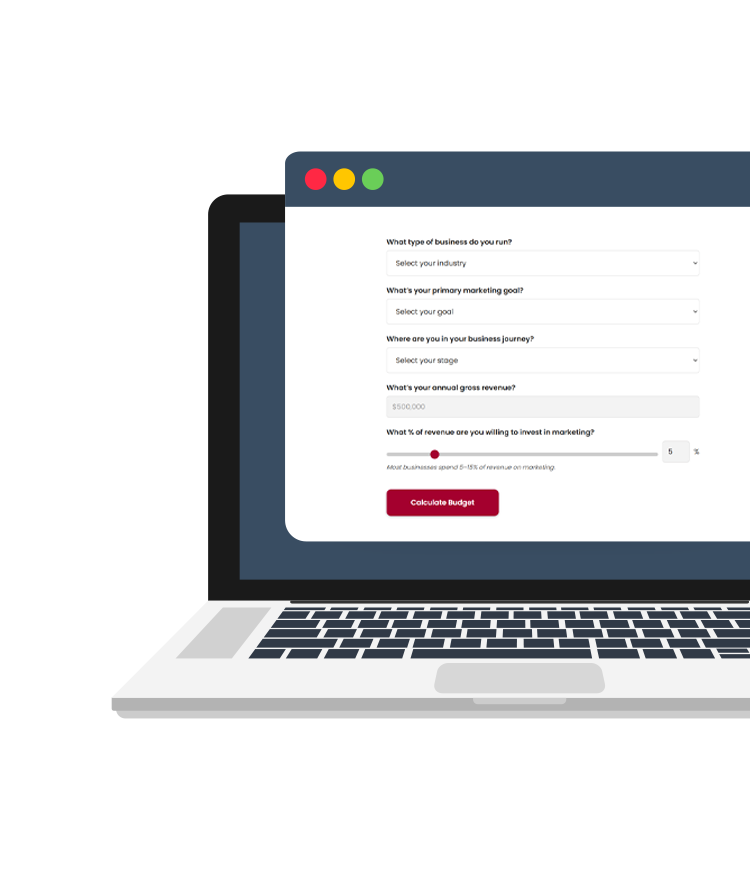
...because 'just throw money at it' isn't a marketing strategy.
4. AI is a great tool, but authenticity is what actually works.
Not to toot our own horn, but we talked about the importance of authenticity way back in January of this year…and boy, were we right.
AI-generated content took over this year. We saw it in blog posts, service pages, ad copy, you name it. And look, AI isn’t the enemy. It’s a great tool when it saves time or helps you get unstuck.
But when businesses lean too hard on it? You can definitely tell.
It all starts to sound the same—safe, generic, and kind of like a robot doing its best impression of a human. And when you’re a small business, that sameness is what kills your edge.
What we learned:
AI won’t ruin your marketing. But letting it replace your voice might.
The best content we saw this year came from people who used AI as a helper, not a crutch. They still shared real opinions. Real stories. Real value. That’s what cuts through—and always will. Real talk. Local relevance. You know…stuff only a real human would say.
5. Video marketing wasn’t a trend.
If there’s one thing that kept delivering across platforms in 2025, it was video. Not just flashy brand videos or big productions—any kind of video that helped people quickly understand what you do and why they should care.
We saw it work in all kinds of ways:
- Short, captioned clips on social posts got better engagement than static graphics
- Simple product demos and behind-the-scenes reels helped build trust
- Brand videos on websites improved time-on-page and conversions
- :30 CTV ads gave local businesses billboard-level visibility (without the billboard price tag)
What we learned:
You don’t need to go viral. You just need to be seen. And video is a huge part of how you do that now.
And before you say “I’m not comfortable on camera”—you don’t even have to be in the video. The key is showing something real about your business. That might be your team in action, your process, your space, or even just explaining a common customer question in a voiceover.
The most important thing? Do it consistently. One great video isn’t a strategy—it’s a starting point.
We’ve been saying this for a while, but 2025 confirmed it:
Video isn’t optional anymore—it’s expected.
???? Read: How Streaming Video Ads Work for Small Businesses (And Why They’re Worth It)
Like this article?
There's more where that came from.

6. Brand trust matters more than ever.
In 2025, we saw it across the board: people weren’t buying like they used to. They clicked around more, asked more questions, took longer to make decisions, and sometimes just didn’t take action at all. And it wasn’t because of bad ads or sub-par promotions. People just… hesitated.
What we learned:
Consistent visibility matters especially when buyers get cautious—because that’s what builds the trust that eventually leads to action.
That meant showing up regularly—not just when you’re running a promo. It meant having solid reviews, accurate listings, clear messaging, and being easy to find and easy to understand.
The businesses that stuck with it—kept showing up in search, stayed active on social, followed up with leads, sent helpful emails—were the ones that stayed top-of-mind. So when buyers were finally ready to move forward, they already knew who to call.
Marketing in 2025 wasn’t just about generating demand. It was about being the one people remembered when demand returned.
What marketing lessons should you take into 2026?
Marketing isn’t static, and 2025 was proof. The tools changed, the buyer behavior changed, and so did the results.
If you’re not sure what to carry forward and what to leave behind, we’d love to help.
???? Book a free 30-minute marketing consultation
We’ll take a look at what you’re doing, what’s working (and what isn’t), and give you honest feedback and some options going forward.
Sign up for a FREE marketing analysis & consultation!
In about 30 minutes, we'll cover your:
-
Business Goals and Challenges
-
Current Marketing Efforts
-
Target Audience and Market Insights
-
Competitor Analysis
-
Customized Growth Opportunities

Still curious? There's more where that came from.



Cougar Digital Marketing is a web design and digital marketing agency based in Tri-Cities and Prosser, Washington. We build custom websites, handle SEO, manage digital advertising, and provide photo and video support to help businesses grow. Questions? We're easy to reach.