Key Takeaways
- Targeted ads don’t know who you are — they know an anonymous browser visited a website.
- Businesses can reach new audiences based on demographics, interests, behaviors, life events, and household-level third-party data.
- Standard geofencing targets people based on locations they’ve physically visited. Addressable geofencing targets them based on who they are — vehicle ownership, credit tier, purchase intent, specific interests.
- Display and streaming video ads are awareness and consideration tools — not direct lead generation. Understanding that distinction is what separates successful campaigns from disappointing ones.
- Bad retargeting is a configuration problem, not a flaw in the medium.
You do a Google search to troubleshoot your ailing HVAC system, close the tab, move on with your life. Twenty minutes later, you’re watching a video, and there it is: an ad for a local HVAC company. You open your news app. Same thing. You fire up your streaming TV that night. There it is again.
It feels a little eerie. Maybe even a little intrusive. And if you’ve ever wondered how that’s happening — or whether some algorithm is reading your mind — you’re not alone.
The reality is both more straightforward and more interesting than most people realize. Here’s what’s actually going on — and why smart local businesses are doing it on purpose.
What Are the Different Types of Targeted Advertising?
Most people picture one thing when they hear “targeted ads” — retargeting, or showing ads to someone who already visited your website. That’s one tool. But businesses have access to several distinct targeting approaches, each serving a different purpose.
Here’s a plain-English breakdown of each type:
Retargeting
Retargeting reaches people who have already interacted with your brand — visited your website, watched a video, engaged with your social content. These are warm audiences. They already know you exist, which makes retargeting one of the most cost-effective ad types available.
Display Advertising
Display ads appear on websites, news sites, apps, and across the broader internet. They reach both existing audiences and brand-new ones, based on targeting criteria. When someone in your target audience reads local news or checks a recipe site, your ad can appear. Display advertising is built for consistent visibility over time.
Streaming Video Ads
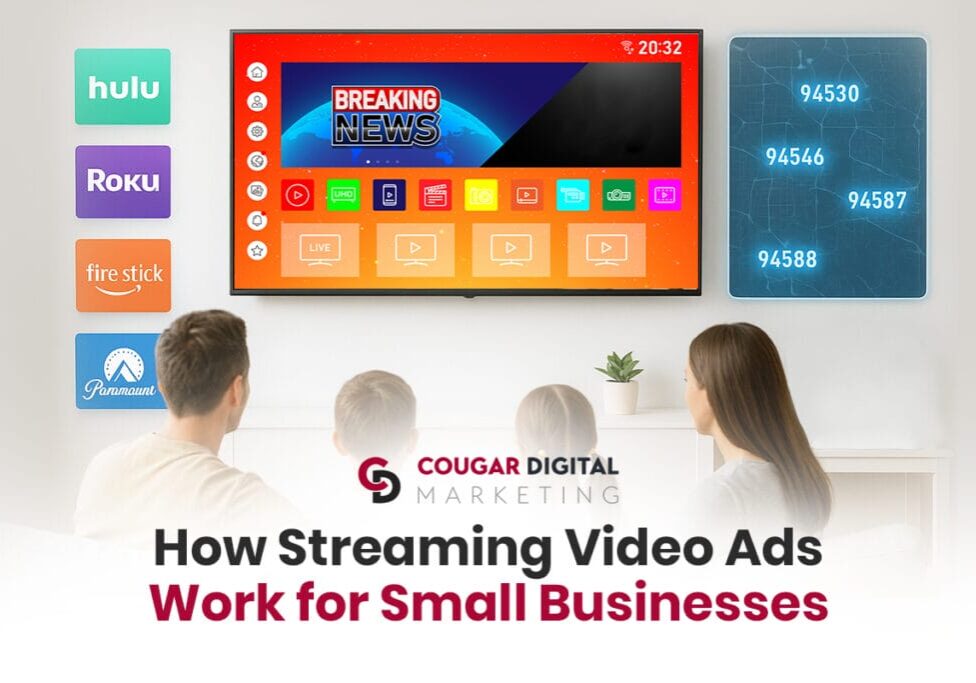
These are the ads that appear on streaming platforms — Hulu, Peacock, Tubi, Pluto TV, and others. They look and feel like traditional TV commercials, but they’re targeted, measurable, and accessible to local businesses at a fraction of what traditional broadcast TV ever cost. Your ad can appear on the same platform as a national brand without a national brand’s budget.
In the Tri-Cities (Kennewick, Richland, Pasco, and West Richland), more than 60% of households have at least one connected TV.
Source: Simpli.fi
In May 2025, streaming captured 44.8% of all TV viewing — surpassing broadcast and cable combined for the first time.
Source: Nielsen
What Can Targeted Ads Actually Target? A Plain-English Breakdown
The targeting options available to local businesses today are genuinely impressive. Here’s a breakdown of the main categories — and the kinds of signals that go into building a real campaign audience.
Who They Are — Demographics
- Age range and gender
- Household income bracket
- Homeownership status
- Zip code or geographic radius
What They’re Interested In and How They Behave
- Actively researching a purchase (in-market signals)
- Browsing content related to home improvement, travel, food and wine, outdoor recreation, and hundreds of other interest categories
- Visiting websites or engaging with content relevant to your industry
Life Events and Life Stage
- Recently moved or is likely to move
- New homeowner
- Recently married, new parent, upcoming graduation
- Approaching retirement
Household-Level Data (Addressable Targeting)
This is where targeting gets particularly precise. Using third-party data matched at the household address level, businesses can reach people based on real-world attributes like:
- Vehicle make, model, or year owned
- Credit score range
- Insurance type and status
- Veteran status
- Interests including wine, travel, outdoor recreation, and hundreds of other verified household attributes
Quick Reminder:
Addressable targeting isn’t about where someone went — it’s about who they are at the household level. It’s some of the most precise audience targeting available to local businesses today.
Location-Based Targeting — Geofencing
Geofencing draws a virtual boundary around a physical location. Anyone who enters that boundary — a competitor’s storefront, a home improvement store, a trade show, a new construction neighborhood — can be added to a target audience and served ads on their devices, even after they leave.
This is particularly effective for businesses whose customers are already in a relevant physical mindset when they visit certain locations.
Geofencing campaigns achieve an average 20% higher conversion rate compared to non-targeted digital campaigns.
Source: WifiTalents Market Report, 2026
Not sure what to spend on marketing?
Find out in 30 seconds.
Plug in your numbers, get a smart budget instantly.

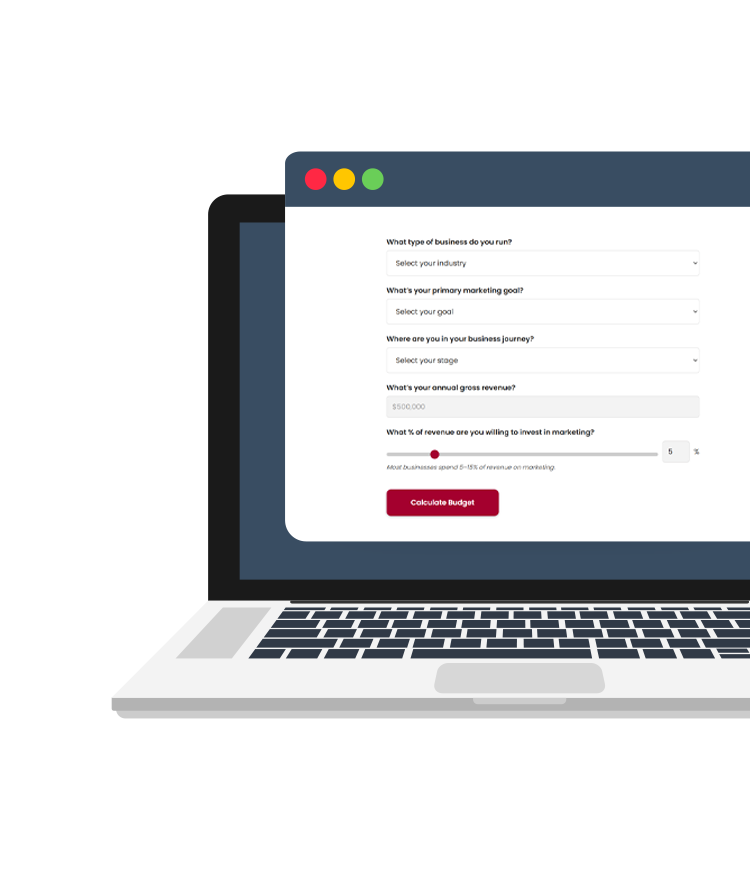
...because 'just throw money at it' isn't a marketing strategy.
Where Does The Data Come From?
The Tracking Pixel
When you visit a website, that site often has a small, invisible snippet of code embedded in it called a tracking pixel. When your browser loads the page, the pixel fires — and it logs one simple fact: a browser visited.
That’s it. It doesn’t know your name. It doesn’t know your email address. It doesn’t know where you live. It knows an anonymous browser ID landed on that page.
From there, that anonymous ID gets added to an audience list. Advertisers use that list to show relevant ads as you move around the internet — across websites, apps, and connected TV platforms.
The “surveillance” feeling comes from how precise it seems. But precision and surveillance are not the same thing. Nobody is watching you browse. It’s an automated system matching anonymous audience signals to ad placements at massive scale.
Why It Follows You Across Every Device
What makes it feel even more pervasive is cross-device targeting. Ad platforms use a combination of behavior-based signals (like being logged into the same account across multiple devices) and modeling, such as shared IP address, usage patterns, and device fingerprinting, to link your phone, laptop, tablet, and connected TV into a single anonymous household profile. That’s why you can browse something on your phone at lunch and see a related ad on your TV that evening. Same anonymous audience ID, recognized across devices.
Where the Data Actually Comes From
It’s also worth knowing where a lot of that underlying data comes from. When you tap “Sign in with Google” or “Continue with Facebook” on a third-party app, you’re agreeing to data-sharing terms that allow those platforms to associate your activity with your account profile. The same goes for loyalty programs, retail apps, and the cookie consent banners most people click through without reading.
None of it is hidden — it’s disclosed in terms of service and privacy policies. But that’s how the data ecosystem powering targeted advertising gets built. Advertisers aren’t accessing your personal information; they’re buying access to aggregated audience segments assembled from data people have, largely without thinking much about it, agreed to share.
What Does Targeted Advertising Look Like for a Real Local Business?
The real power of these tools isn’t any single targeting option — it’s layering them strategically. Here are a few examples of how that works in practice.
A Roofing Company
Target homeowners aged 35–65 within specific zip codes, with household income above a set threshold, who have been browsing home improvement content or are flagged as in-market for roofing services. Layer in geofencing around home improvement stores to reach people already in that mindset. Ad spend goes toward the people most likely to actually need the service — not the general public.
A Real Estate Agent
Target households flagged as “likely to move” within a target geography and income range. Add addressable data for households with growing families, life event triggers like marriage or new baby, and people browsing real estate listing sites. Geofence competing open houses on weekends to reach buyers who are already actively looking.
A Medical Clinic or Healthcare Practice
Target adults within your service area in relevant age brackets with household income signals suggesting they carry private insurance. Layer in addressable data for life events like a new baby, a recent move, or a household that’s aged into Medicare eligibility. Use in-market behavior signals for people actively researching healthcare providers or specific conditions relevant to your specialty. Geofence urgent care competitors and nearby hospital campuses to reach people who are already seeking care but haven’t established a relationship with a provider yet.
Like this article?
There's more where that came from.

What Are Display and Streaming Ads Actually For? (And What They’re Not)
This is where a lot of businesses get frustrated. They run a display or streaming campaign, don’t see a spike in phone calls, and conclude it didn’t work.
Here’s the reality: display and streaming ads are awareness and consideration tools. They are not built to generate an immediate phone call or form fill. That’s what search ads do.
Think about how buying decisions actually work. Most people don’t search for an HVAC company the moment their unit starts running loud. They notice it, think about it, mention it to someone. Eventually they search — and when they do, they’re far more likely to call the business whose name they’ve seen a few times over the past month.
Display and streaming ads do that pre-search work. They get your name in front of the right people before the moment of need, so that when the search happens, you’re already familiar. That’s not a soft result — that’s a competitive advantage.
Quick Reminder:
Search ads are for people who are ready right now. Display and streaming ads make sure people already know your name when “right now” arrives.
Why Do Some Targeted Ads Feel Annoying — and How Do Good Ones Avoid That?
Everyone has experienced the bad version. You buy a pair of shoes and then see an ad for those exact shoes seventeen times over the next two weeks. Or you get a quote from a contractor and their ad follows you around for months afterward.
That’s not an inherent flaw in targeted advertising. It’s a configuration problem — and one of the clearest signs a campaign isn’t being managed carefully.
A well-built campaign includes three things that separate quality work from sloppy work:
- Frequency caps: Limits on how many times the same person sees the same ad within a given timeframe.
- Audience exclusions: Removing people who have already converted, so budget isn’t wasted on someone who already called or bought.
- Message sequencing: Showing different creative to someone who visited once versus someone who spent time on a pricing page. Those aren’t the same person at the same stage, and they shouldn’t see the same ad.
The difference between a targeted campaign that builds trust and one that feels intrusive comes down to how thoughtfully it’s configured and managed. The technology is the same — the expertise is what sets them apart.
Good to Know:
One of the first things a well-configured campaign includes is a conversion exclusion list — so you’re not burning budget showing ads to people who already took action.
So What Does This Mean for Your Business?
Your customers are already being targeted. Every day, their browsers are picking up signals — what they’re researching, what content they’re engaging with, what life stage they’re in. The question isn’t whether this technology works. It does, and it’s well-documented.
The question is whether the ads they’re seeing are yours, or your competitor’s.
Display advertising, streaming video, addressable targeting, and geofencing aren’t big-brand-only tools anymore. They’re accessible, measurable, and — when built and managed correctly — one of the most cost-effective ways for local businesses to stay in front of the right people over time.
At Cougar Digital Marketing, we build and manage targeted ad campaigns for businesses in the Tri-Cities and beyond — with clear reporting, plain-English explanations, and zero fluff. If you’re curious what a well-targeted campaign could look like for your business, let’s talk it out.

Sign up for a FREE marketing analysis & consultation!
In about 30 minutes, we'll cover your:
-
Business Goals and Challenges
-
Current Marketing Efforts
-
Target Audience and Market Insights
-
Competitor Analysis
-
Customized Growth Opportunities

Still curious? There's more where that came from.







Cougar Digital Marketing is a web design and digital marketing agency based in Tri-Cities and Prosser, Washington. We build custom websites, handle SEO, manage digital advertising, and provide photo and video support to help businesses grow. Questions? We're easy to reach.