


Should you publish prices, require custom quotes, or offer a little of both? Here's how to decide what makes sense for your customers and your business.
Deciding whether to put prices on your website isn’t always straightforward. Show a number, and you might lose a potential customer before you have a chance to explain the value. Leave prices off, and you might lose someone who just wants to know whether your services fit their budget. Neither approach is right for every business.
Business owners in the Tri-Cities and across Eastern Washington often ask us whether they should publish prices online. The best answer depends on what you sell, how you price your work, and what customers need to know before reaching out.
Let’s look at the advantages of showing prices, the situations where a quote makes more sense, and the options between the two.
Before you decide whether to list your prices, consider this
- Showing prices on your website builds trust and screens out people who were never a fit, but it can cost you flexibility on custom work.
- More buyers now expect pricing before they reach out. In one survey, 74% of B2B buyers said they want clear, detailed pricing upfront.
- You are not stuck choosing between an exact price and nothing. Starting-at prices, ranges, and “what affects the cost” breakdowns are all real options.
- If every job is genuinely custom, explaining how you price is often more useful to a buyer than a number that will not apply to them.
- The right call depends on your sales process: whether that first conversation adds real value, or just adds a step the customer resents.
Why more buyers expect to see pricing before they ever contact you
Before contacting a business, customers often read reviews, compare options, and look for a sense of cost. Pricing helps them decide whether to keep considering your business or move on.
Customers often research and compare businesses on their own before making contact. If your website offers useful pricing context, visitors can decide whether your service is within reach. If it requires a form submission just to get a ballpark figure, some people will look elsewhere.
Even in business-to-business sales, where custom quotes are the norm, the expectation is shifting.
Quick stat: In Mixology’s 2025 B2B Buyer Report, 74% of buyers said they want clear, detailed pricing upfront, and 69% named a lack of clear pricing as one of their biggest frustrations with vendors.
Source: DesignRush
Website pricing transparency isn’t about publishing every detail of a custom quote. It’s about giving potential customers enough information to decide whether to take the next step.
What you gain by showing prices on your website
Showing prices on your website can help people decide whether your services fit their needs and budget before they contact you. That can make the inquiries you receive more productive.
- You build trust before you ever meet. A business that’s upfront about cost reads as confident and honest. Silence can quietly read as “if you have to ask, you can’t afford it,” even when that’s the last thing you mean.
- You attract better-fit leads instead of just more of them. When people can see roughly what you charge, the ones who reach out are already in the right ballpark. You spend less time on calls that were never going anywhere and more on the leads that actually fit.
- You save everyone time. No back-and-forth just to establish whether you’re in range. The customer self-selects, and you talk to people who are ready to talk.
- You answer a question people search for. Clear pricing information helps visitors understand your services and gives search systems specific information to interpret. It doesn’t guarantee a particular Google ranking or AI recommendation.
Pro tip: Unsure whether showing prices will discourage inquiries? Test a starting price or range on one service page, then compare the number and quality of inquiries over time. Fewer inquiries aren’t necessarily a problem if more of them turn into customers.
When leaving prices off your website makes sense
Transparency has real benefits, but “always list a number” isn’t a rule. There are honest reasons to keep pricing off a page, or to hold some of it back.
- Every job is genuinely different. If your work is scoped from scratch each time, a single number can mislead more than it helps. A figure that fits a small job can scare off a big one, and the reverse is just as true.
- A number out of context undersells the value. For high-touch or specialized work, the price only makes sense once the customer understands what’s involved. Leading with it can flatten a real conversation into a cost comparison.
- The conversation itself is part of the service. For consultative work, where diagnosing the problem is half the value, that first call sometimes needs to happen. If skipping straight to a price would shortchange the customer, that’s a fair reason to invite the conversation instead.
Notice what’s not on this list: “my competitors don’t show theirs.” Matching a competitor’s silence is rarely a strategy. More often it’s just a habit nobody has questioned.
Ways to show pricing on your website without boxing yourself in
Publishing pricing doesn’t have to mean listing one fixed number for every service. There are several ways to give customers useful guidance while leaving room for a custom quote.
- Starting-at prices. “Projects start at X” sets a floor without promising a ceiling. It filters out anyone well below your range while leaving room to scope the real job.
- Ranges or tiers. A good-better-best layout, or a simple low-to-high range, gives people a realistic bracket and a sense of where they might fall. Tiers also tend to nudge buyers toward the middle option, which is often right where you want them.
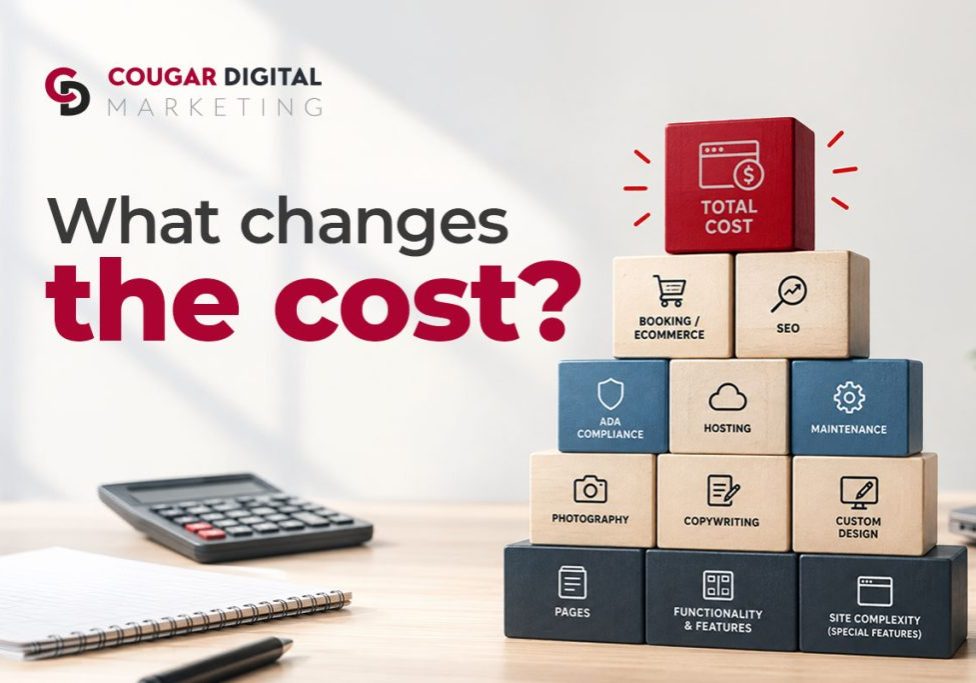
- A “what affects the cost” breakdown. Instead of a number, explain the factors that move the price: size, scope, materials, timeline, complexity. This is often more useful than a figure, because it teaches the customer how to think about their own project.
- Typical project examples. “A recent project in this range included X, Y, and Z” turns an abstract number into something concrete, without committing you to it for every future job.
You can also combine approaches. A business might publish fixed prices for standard services and request quotes for more complex projects. Customers get a useful starting point without being promised a price that may not fit their situation.
Try it yourself: Open your services page and pick the one thing customers ask the price of most. Draft a single line for it right now: a starting-at figure, a range, or the three factors that move the cost. You don’t have to publish it today. You just need to see how it feels to say it out loud.
How to decide whether to list prices on your website
If you’re unsure whether to publish prices, look at how customers make buying decisions and what happens during your first contact with them. A few questions can help:
- Does that first conversation genuinely help the customer, or just gate the information? If the call adds real value, protecting it makes sense. If it mostly makes people jump through a hoop, you’re adding friction, not value.
- Are your prices fairly consistent, or all over the map? Consistent pricing is easy to publish. Truly variable pricing is a better fit for ranges or a factors-based explanation.
- What do people actually ask on that first call? If it’s almost always “so what does this run,” your site could be answering that and moving the conversation forward instead of starting from zero.
- What would your best-fit customer need to feel confident? Build for the person you want more of, not the bargain-hunter you’re trying to avoid.
How you present your services on your website matters just as much as the numbers. A price is more helpful when visitors can see what’s included, what might change the cost, and how to request an accurate quote.
Further reading: A lot of this comes down to how people buy now, doing most of their homework before they ever raise a hand. Here’s how that shift is reshaping the buying journey.
Should your website have the conversation for you?
Improving your website’s pricing information doesn’t require a complete redesign. Look back at your last ten conversations with new prospects. How many began with a question about price? If it’s a recurring question, consider answering part of it on your service page so the first call can go further.
Start with one service. Add a realistic price range, a starting price, or a short explanation of what affects the cost. See whether it helps customers make more informed inquiries, then adjust as needed.
Not sure whether your services page is helping buyers decide, or quietly sending them to someone else? Torn on how much to show without giving away the custom-quote conversation? Contact Cougar Digital and we’ll help you figure out what your site should say about pricing.

Get a FREE marketing analysis & consultation!
In about 30 minutes, we'll cover your:
-
Business Goals and Challenges
-
Current Marketing Efforts
-
Target Audience and Market Insights
-
Competitor Analysis
-
Customized Growth Opportunities

Still curious? There's more where that came from.









Cougar Digital Marketing is a web design and digital marketing agency based in Tri-Cities and Prosser, Washington. We build custom websites, handle SEO, manage digital advertising, and provide photo and video support to help businesses grow. Questions? We're easy to reach.
